Complete Guide to Saxophone Breath Control Techniques
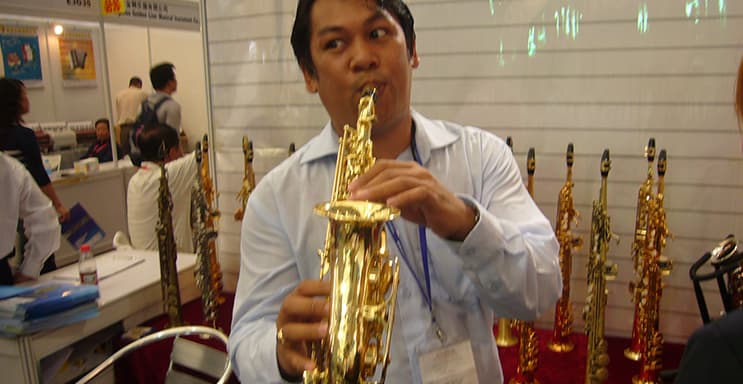
1. **Embouchure and Mouthpiece Control**
**Placement**
The mouthpiece should be inserted to a depth of 1/3 to 1/2 of the facing. Inserting too deeply can compress the reed, while too shallow a placement disperses airflow.
**Key Points on Embouchure**
- The lower lip should rest naturally against the reed, maintaining a "relaxed yet supportive" contact.
- The corners of the mouth should gently curve inward (similar to a slight smile), avoiding puffed cheeks.
2. **Breath Control Techniques**
- **Airflow Characteristics:**
Use a "soft yet penetrating" airstream, supported by abdominal muscles to create a wave-like flow.
Upon inhalation, engage the abdomen momentarily while allowing the throat to naturally lift (without forced opening).
- **Breathing Rhythm:**
Maintain a steady breathing pace while playing, avoiding sudden fluctuations in airflow intensity.
3. **Body Coordination Essentials**
| Body Part | Key Technique |
|----------------|---------------|
| **Throat** | Keep a naturally open state, as when yawning—avoid forcefully expanding. |
| **Tongue** | Relax completely and rest on the lower jaw without interfering with reed vibration (think of the tongue position when pronouncing "Fu"). |
| **Fingers** | Lightly touch the keys, using only the natural weight of the fingers to press, maintaining a floating wrist sensation. |
4. **Systematic Practice Recommendations**
**Phased Training:**
- **Beginner:** Practice 5-minute long tones on middle G, focusing on airflow stability.
- **Advanced:** Alternate between airy tones and full tones within a C major scale.
**Real-Time Checks:**
- **Mirror Observation:** Ensure the lower lip remains smooth without wrinkles.
- **Tactile Confirmation:** The saxophone body should not shake when pressing keys.
5. **Troubleshooting Common Issues**
- **Issue: Tonal Distortion (Buzz/Rattling Sound)**
→ **Check:** ① Mouthpiece inserted too deeply ② Excessive lower lip pressure ③ Throat tension.
- **Issue: Interrupted Airflow**
→ **Exercise:** Practice continuous "hiss—" exhalation for 30 seconds to strengthen diaphragm control.
**Professional Tips:**
- At the start of daily practice, use a **#2.5 soft reed** to adapt to airy tones.
- In Taiwan’s humid climate, flatten the reed’s pores with a **reed trimmer** before practicing.
- After each session, clean moisture inside the mouthpiece with a **mouthpiece brush**.
**Key to Progress:**
Initially, **15 minutes of focused daily practice** is more effective than long, unfocused sessions. Once airy tones are mastered, try applying them to the jazz standard *"My Funny Valentine"* to experience practical performance effects.