Key Points to Note for Baritone Saxophone Solos
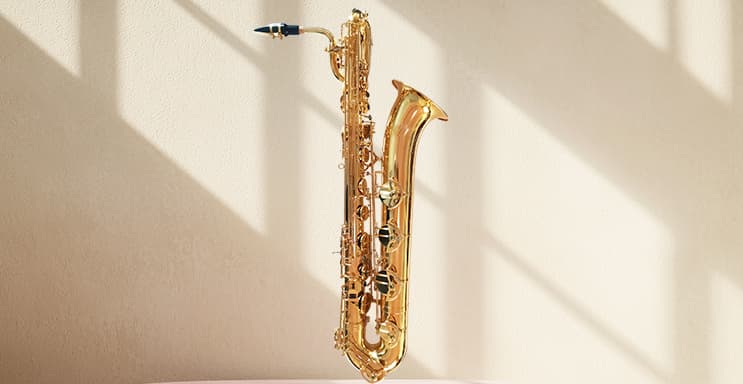
The baritone saxophone is a type of saxophone, pitched in E♭. It is one of the five main types of saxophones and is relatively uncommon. It is larger and heavier, nearly twice the size of an alto saxophone, with a height exceeding one meter. Due to its weight, a neck strap is required to support the instrument during play, which is why it is rarely used for solo performances. If performing a baritone saxophone solo, the following considerations should be noted:
1. **Neck Strap Adjustment**: Use the neck strap to hang the instrument in front of the chest, positioned slightly to the right. Adjust the strap length so that it bears the instrument's weight while relieving tension in the hands and arms.
2. **Posture**:
- When standing, keep feet shoulder-width apart.
- When sitting, slightly open the legs outward, forming a 90-degree angle with the feet flat on the ground. Maintain a natural, upright posture without bending the back, chest, waist, or abdomen.
3. **Mouthpiece Angle**: The angle of the mouthpiece should align with the natural direction of exhaled air. Since the airflow is slightly downward, the mouthpiece and neck should also tilt downward slightly, ideally at about a 45-degree angle.
4. **Hand and Finger Technique**: Keep fingers, wrists, and arms relaxed. Both hands should be naturally curved with slightly raised knuckles—avoid flat or collapsed fingers. Finger movements should be rhythmic, with moderate force and no excessive stiffness or high lifting.
5. **Hand Positioning**:
- **Left Hand**: The thumb rests on the T key and controls the octave key, while the pinky operates the 11 (B♭), 9 (C♯), and 8 (G♯) keys.
- **Right Hand**: The thumb supports the instrument by holding the thumb rest near the body, while the pinky controls the 1 (C) and 2 (E♭) keys. The index, middle, and ring fingers of both hands rest on the I, II, and III keys, respectively.
6. **Overall Control**: The mouth controls the mouthpiece, the neck strap supports the saxophone’s weight, and the hands maintain balance, ensuring optimal performance posture.