Saxophone: The Soulful Vocalist Across Eras
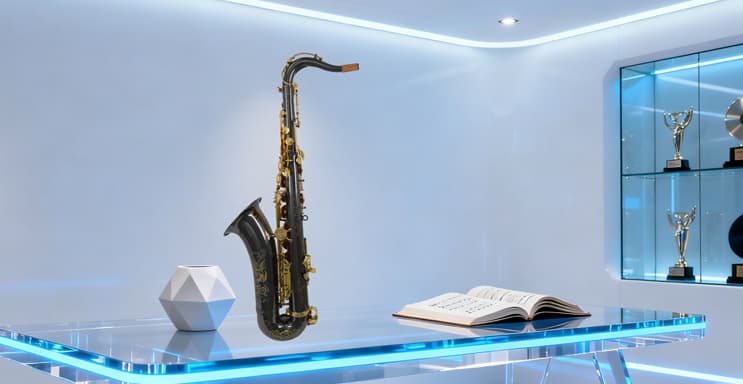
In the vast constellation of pop and rock music, one star shines with a warm and unique light—the saxophone. Invented in 1840 by Belgian instrument maker Adolphe Sax, this instrument, through nearly two centuries of musical evolution, continues to leave a profound mark on every era with its narrative timbre.
Origins: A Magnificent Transition from Jazz to Rock
The saxophone first emerged in military bands, subsequently flourishing in the world of jazz. However, its journey into the mainstream of pop and rock music is akin to the evolution of musical culture. In the 1950s, as rock music began to emerge, the saxophone, with its unique sonic charm, found its place in this burgeoning musical form.
The exhilarating saxophone performance in Little Richard's *Tutti Frutti*, the powerful saxophone solo in Elvis Presley's *Jailhouse Rock*—these early rock classics prove to the world that the saxophone can not only express the casualness of jazz but also the passion of rock.
Diverse Musical Practices
Musicians of the 1980s demonstrated remarkable creativity, incorporating the saxophone into a wide range of musical styles. Kirk Pengelli's emotionally charged saxophone interlude in INXS's *Never Apart* propelled new wave rock to a dramatic climax; Dire Straits' *Your Latest Trick*, through Michael Blake's masterful performance, perfectly blended the essence of jazz into a rock narrative; and the late Clarence Clemons' powerful saxophone playing in Bruce Springsteen & E Street's *Born to Run* became a symbol of American blue-collar rock.
This period also witnessed the rise of many outstanding saxophonists. Candy Dufour's masterful performance in "Lily Was Here" showcases the extraordinary charm of female saxophonists; David Bowie, in "Blue Jeans," not only played the saxophone himself but also invited Lenny Pickett to form a complete brass section, demonstrating a profound understanding of the saxophone's timbre; and UB40's Brian Travers, in "Food for Thought," perfectly combined the saxophone with reggae rhythms, opening up new musical possibilities.
The Enduring Charm of the Saxophone's Tone
Why has the saxophone maintained such enduring vitality in pop and rock music? The answer may lie in its unparalleled expressiveness. The saxophone's tone is closest to the human voice, capable of expressing emotional depth that other instruments cannot match. Technically, it can play long, melodious tunes as well as fast, exciting improvisations; emotionally, it can express the loneliness of a midnight street corner as well as ignite a collective celebration in a stadium.
In Pink Floyd's "Money," Dick Parry's saxophone playing adds an irregular rhythmic beauty to this progressive rock track; in the Rolling Stones' "Brown Sugar," Bobby Keyes' raw and unrestrained improvisation defines the raw tension of the rock saxophone; and in the Working Men's "Who Can I Now?", Greg Ham's highly recognizable opening riff showcases another possibility for the saxophone in pop rock.
Echoes of the New Era
Even into the new century, the saxophone continues to play a vital role in popular music. Lady Gaga's "The Edge of Glory," featuring Clarence Clemons, allows the bloodline of classic rock to continue in a new generation of pop music; while numerous independent musicians and jazz revivalists continue to explore new possibilities for the saxophone in contemporary music.
From the saxophonist of legendary bands to the improvisational performances of multi-talented members, and the brilliant contributions of top-notch accompaniment musicians, the saxophone has left a unique mark on every musical era. It is not only a vital player in the history of pop and rock, but also a bridge connecting different musical styles and an emotional bond across generations.
When we look back at these classic works, it's easy to see that the saxophone has never been merely a musical embellishment, but a conductor of emotion that touches the heart. With its unique musical language, it tells the stories of each era, records the trajectory of musical evolution, and has become an indispensable and warm presence in our collective memory. In the future development of music, this "humble instrument" will surely continue to sing, touching generations of listeners with its timeless sonic charm.