On the Core Value and Practical Significance of Long Tone Training for the Saxophone
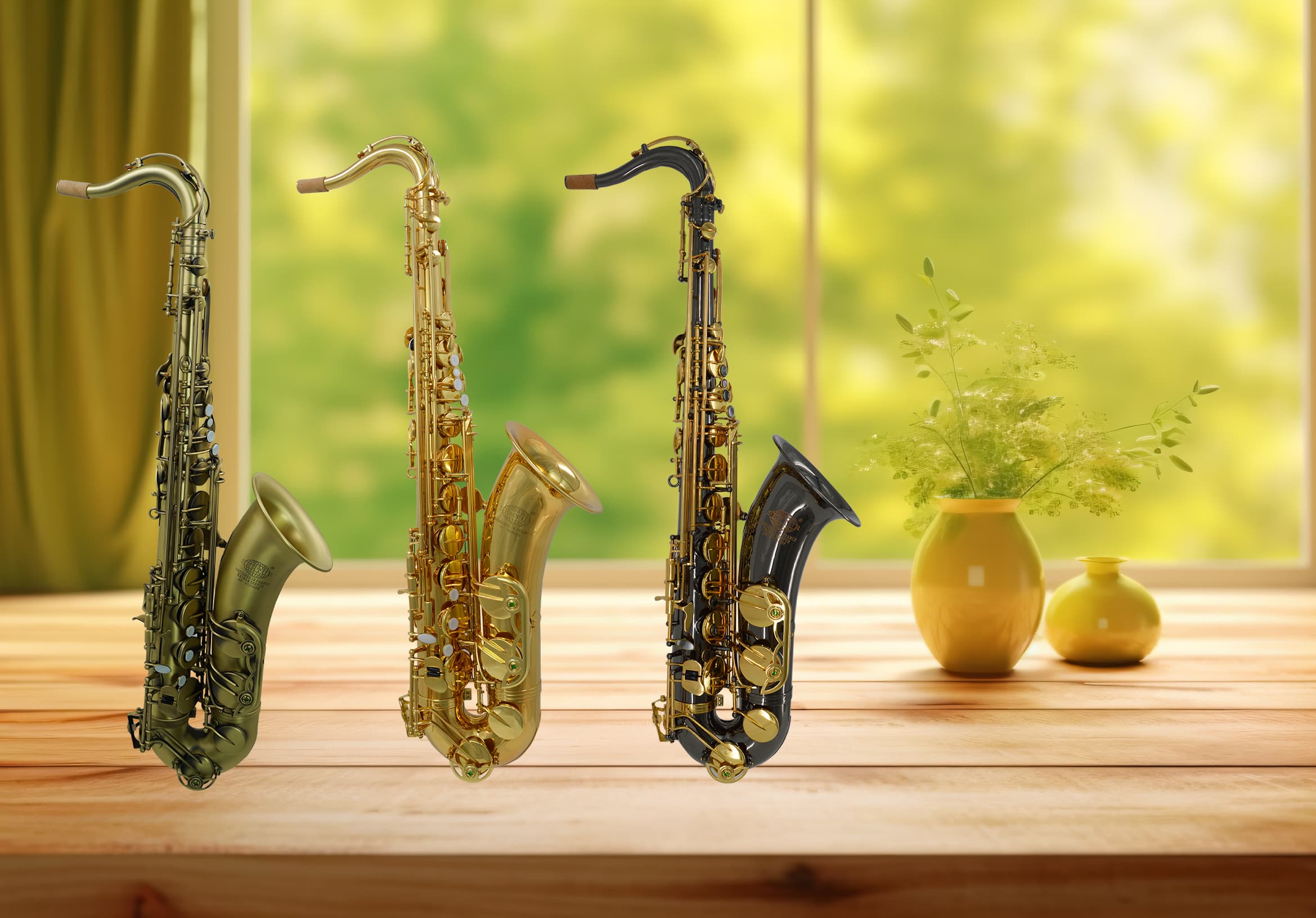
In the playing system of wind instruments, sustained tone training is undeniably fundamental, like the foundation of a building, serving as the starting point for learners to advance their skills and achieve artistic breakthroughs. For saxophone learners, sustained tone training is an indispensable core component of the basic skills system, its importance comparable to stance training in martial arts—seemingly simple, yet crucial for solidifying the foundation. It directly determines the player's sound quality, breath endurance, embouchure stability, and breath control precision, serving as the "source of vitality" for saxophone playing techniques. However, this core value is often obscured by its monotonous and repetitive practice. Many learners, unable to endure the tedium, neglect persistence, leading to frequent problems such as incorrect embouchure and weak breath control, ultimately becoming an "invisible barrier" hindering skill improvement. Therefore, every saxophone learner must firmly establish the core position of sustained tone training from the depths of their mind to steadily progress on their artistic path.
The primary value of sustained tone training lies in building a solid physiological foundation for the player—increasing lung capacity and solving the core problem of "insufficient breath" in playing. For specific practice, a "step-by-step note value training method" can be used: start with a whole note (4 beats), increasing by 1-2 beats every three days, gradually extending to a dotted half note (6 beats) and a half note with a dot (9 beats). Initially, a metronome can be used to maintain a stable tempo, ensuring even breath control rather than rapid bursts. The core requirement for long tone practice is to extend the note's value as much as possible while inhaling fully. During this process, the diaphragm naturally descends, the ribs rise and expand, and the inner diameter of the ribcage increases, allowing for full expansion and repeated training of the lungs. Simultaneously, a specific "fast inhale, slow exhale" exercise can be added: quickly inhale a full breath in 2 seconds, lightly touching the mouthpiece with the lips to maintain the correct embouchure, and slowly exhale at a steady pace until the breath is exhausted. Repeat 10-15 sets daily. This systematic breathing training not only effectively improves lung capacity but also allows learners to master the scientific breathing method of "deep inhale, even exhale," laying a solid foundation for breath support in subsequent complex performances.
If breath is the "power source" of playing, then embouchure is the "valve" that controls this power, and sustained tone training is the best way to stabilize this "valve." The tone quality of the saxophone directly depends on the standardization and stability of the embouchure, especially for beginners, establishing correct embouchure habits is crucial. In specific training, you can first do "embouchure warm-up without the mouthpiece": close your lips naturally, pull the corners of your mouth slightly back, lift your palate as if you are holding a straw, hold for 30 seconds, then relax, repeat 5 sets to help form a stable oral cavity shape. After inserting the mouthpiece, use the "pitch anchoring method," choose the middle register C or G, which is the easiest to produce on the saxophone, as the starting note, and calibrate the pitch by referring to a piano or tuner. When playing, observe the embouchure with a mirror to ensure that the lower lip only covers 1/3 of the lower teeth, and the mouthpiece entry depth is controlled at 1.5-2 cm (fine-tuning according to the model). In long-tone practice, learners don't need to be distracted by complex rhythms and fingerings. They can focus on coordinating the angle of their lips and the mouthpiece, as well as the direction of their mouth muscles, allowing airflow to enter the mouthpiece through the optimal path, producing a pure and full sound. Beginners often experience embouchure distortion due to insufficient embouchure muscle endurance or improper technique. This can be alleviated through the "segmented persistence method": pause for 5 seconds after playing for 15 seconds, focus on adjusting the embouchure, and then continue, gradually extending this to 30 seconds, then 1 minute of continuous playing. Long-tone training, through a repetitive cycle of "correction—distortion—correction—consolidation," allows the correct embouchure to be ingrained in muscle memory, ultimately forming a stable and reliable playing habit.
"Relative relaxation" in performance is a key prerequisite for artistic expression, and long-tone training is the best way to cultivate this relaxation. In saxophone playing, excessive tension in the mouth, hands, and other parts of the body directly affects the playing state. Only relaxation allows the performer to focus on the music itself and enhances performance confidence. Long tone practice doesn't require focusing on complex techniques. Learners can concentrate entirely on embouchure adjustments, breath control, and sound listening, achieving maximum relaxation and coordination of all body parts through focused attention. This relaxed state forms muscle memory, which in turn benefits other technical exercises, making fingering and rhythm training more efficient and ensuring stable performance on stage—when the body becomes accustomed to this relaxed playing state, artistic expression has a solid foundation.
The optimization and enhancement of tone is the most direct manifestation of the artistic value of long tone training. A beautiful and melodious saxophone tone originates from maximum breath control and a scientific vocal production method. Specific training can employ the "tone comparison method": first, play a long tone in a natural state, record it, and then compare it with classic saxophone performance excerpts to analyze the differences in fullness and brilliance of your own tone, and then make targeted adjustments. In the relaxed state of long tone practice, learners can overcome the incorrect habit of using the chest, shoulders, and back for power, instead using the coordinated contraction of the lower back, abdomen, and diaphragm to propel the breath, allowing the airflow to act smoothly on the air column inside the tube, producing a uniform, full, and luminous vibration. At this point, the tone can be optimized using the "oral resonance adjustment method": While playing, try expanding the oral cavity space, raising the soft palate as if holding a mouthful of water to make the sound more penetrating; simultaneously, fine-tune the airflow angle—a slightly downward airflow makes the low register richer, while a slightly upward airflow makes the high register brighter. For advanced learners, "overtone training" is key to improving tone quality: when playing basic notes (such as middle C), by controlling breath pressure and lip tightness, stimulate the overtones of the air column inside the tube, feel the tonal changes after different harmonics are superimposed, and gradually cultivate a refined control over tone. At this stage, learners can consciously refine their tone by fine-tuning their lip shape, controlling airflow speed, and expanding the oral cavity space, gradually approaching the ideal sound quality, making each note full of vitality and emotional warmth.