How to Produce a Full, Clear Low Register on the Tenor Saxophone
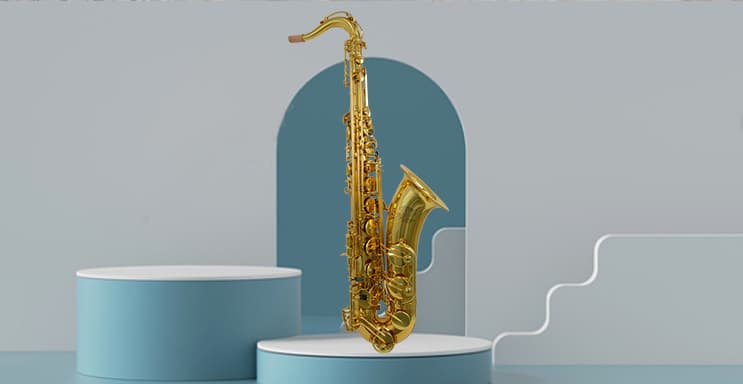
Mastering the low register of the tenor saxophone is a crucial step for any player to move from simply "playing" to "playing well." Those deep, full, and articulate low C, low B, and low Bb are the solid foundation of a large orchestra and the heart-stirring breath in jazz ballads. However, many players often feel powerless in this range: the sound is weak, the pitch is too low, or they accidentally "crash" out an octave higher, instantly ruining the carefully crafted atmosphere. To overcome these challenges, we need to view breath control, embouchure, instrument condition, and even practice techniques as an organic whole, refining them systematically.
I. Reshaping the Foundation of Breath Control: A Mindset Shift from "Blowing" to "Sending"
The first enemy in the low register is often ourselves—specifically, insufficient depth and stability of breath. Many players instinctively "tighten" their breath when playing low notes, trying to squeeze out sound with their lips or throat, which is precisely the root of the problem. A very effective image is this: imagine you're not playing an instrument, but breathing on a cold window, creating a thick mist. This feeling of an open throat and expanded back of the mouth is the starting point for bass resonance.
True power should come from the diaphragm—that dome-shaped muscle at the base of the lungs. Try inhaling, expanding your abdomen and sides outwards, feeling the breath sink to your waist. When exhaling, don't "push" with your chest or shoulders, but slowly and continuously contract your abdominal muscles upwards and inwards, providing a stable and powerful ballast for the airflow. A fun supplementary exercise is to sit on the edge of a chair with your feet slightly off the ground. This posture naturally engages your core muscles, allowing you to intuitively feel the support of the diaphragm.
Another common misconception about breath control is that "bass requires slow, warm air." In reality, to produce a full, solid vibration in an instrument, especially a large-diameter instrument like the tenor saxophone, what's needed is a fast, focused, and relatively "cool" airflow. This airflow needs sufficient density and speed to drive the air column within the tube to vibrate effectively, producing a clear core tone. You can try starting in a comfortable middle register (such as G), playing a sustained long note, and then, without interrupting the airflow, letting the note smoothly slide down to low C, focusing throughout on maintaining constant airflow pressure and speed, as if a laser beam precisely hits the mouthpiece.
II. Refining the Details of Mouth Shape: The Unity of Stability and Openness
If breath is the fuel, then mouth shape is the engine block; it must be strong enough to withstand and guide that powerful energy. A widely circulated misconception is that "relaxing the chin is necessary for playing low notes," which often leads to the lower lip losing support, causing the mouth shape to collapse. The result is either a lower pitch or air leakage, with the sound "slipping" directly onto the overtone sequence an octave higher.
The correct mouth shape should maintain a "wrapped" sense of stability. Slightly pull the corners of your mouth apart, like a smile, and tense your orbicularis oris muscles. Gently curl your lower lip inward, covering your lower teeth, providing a soft yet firm support for the bamboo plectrum. Your upper teeth should firmly bite down on the bevel of the mouthpiece (usually about one centimeter from the tip). This support should be like the roots of a large tree, remaining stable regardless of changes in the airflow above.
Even more crucial than the lips is the shape of the space inside the mouth, what we call the "mouth and tongue position." You can try producing a deep "ah—" sound, feeling how the back of your tongue naturally rises while the tip lowers, touching your lower gum. This position opens the throat passage, expands the resonance space of the mouth, and allows the tone in the lower register to become warm and resonant. To solidify this connection, try "octave alignment" exercises: starting from middle C, play chromatic scales down to low C, playing each note with full volume and carefully listening to ensure the tone is even, without any abrupt changes in tone due to mouth shape or throat position. You should treat each octave as a resonant overtone nested within the next octave, harmonizing the entire instrument's resonance through coordinated breath control and tongue placement.
III. Diagnosing Your Instrument's Condition: Making Your Equipment Your Ally
After countless battles with the bass register, always give your saxophone a thorough check-up first. Sometimes the root of the problem isn't technique, but an instrument in poor condition. The bass register of a tenor saxophone demands extremely precise key sealing. Even a small leak, such as in the G-flat key's pad (a notorious "problem child"), if slightly misaligned in the linkage and not properly closed, will prevent proper sound production in the low C-flat or lower registers. Similarly, worn, hardened, or unevenly fitted pads on the bass C, B, and B-flat keys will cause breath to dissipate like a leaky bellows, forcing you to exert more force, with the opposite effect.
Therefore, regularly having your instrument serviced and adjusted by a professional technician is crucial. A well-sealed instrument with smooth mechanical movement provides clear, immediate feedback, ensuring that all your efforts in breath control and embouchure are faithfully rewarded, rather than "betrayed" by the instrument itself.
Furthermore, the combination of the mouthpiece and the bamboo reed directly affects the performance in the low register. Generally, mouthpieces with larger tip openings or pronounced baffles, while more powerful in the high register or modern solos, significantly increase the difficulty of control in the low register. For players struggling with the low register, choosing a medium-opening mouthpiece (such as size 5 or 6) with a more traditional bore design, paired with a moderately soft bamboo reed (such as size 2 or 2.5), will make it easier to achieve responsive, focused low notes and avoid fatigue and intonation problems caused by over-engaging.
IV. Planning a Practice Path: Building Strength Through Patience and Persistence
Mastering stable playing in the low register is not something that can be achieved overnight; it requires intelligent practice methods and sufficient patience. An effective practice plan must include long tone practice in the low register. Try starting with a medium-forte (mf) volume, smoothly blowing a low C, maintaining absolute stability in tone and volume for 8 to 12 seconds. Then, without changing your embouchure, try diminuendo to very soft (pp), and then crescendo back to medium-forte. This dynamic exercise effectively cultivates your control over low notes in the soft register, allowing you to perform with ease in various musical situations.